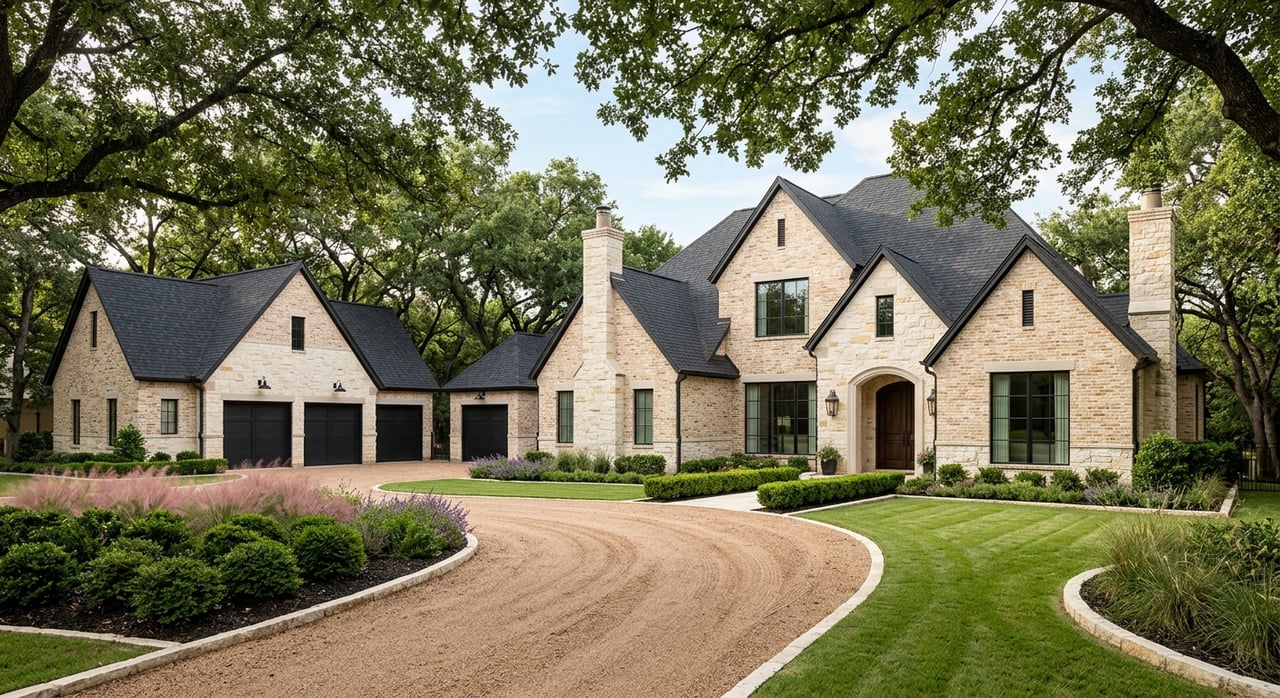
You do not buy acreage in Argyle the same way you buy a home in a typical subdivision. More land can mean more privacy, more flexibility, and more room to enjoy your property, but it can also mean more systems, more due diligence, and more day-to-day upkeep. If you are considering acreage living in Argyle, it helps to understand what varies from parcel to parcel so you can buy with confidence. Let’s dive in.
Argyle Acreage Means Different Things
Argyle has a wider range of homesites than many buyers expect. According to the Town of Argyle, local housing ranges from small-lot homes to expansive custom homes on multiple acres, with typical lot sizes around 1 to 2 acres and additional 5 to 10+ acre tracts suited to farming, ranching, and equestrian use.
That broad range shows up in current inventory too. Active listings have included properties around 1 acre, 2 acres, 4 acres, 5 acres, 8 acres, 11 acres, and 15 acres. In practical terms, acreage living in Argyle can mean anything from an estate lot with more breathing room to a true ranchette with specialized improvements.
For many buyers, that is the first important mindset shift. Acreage is not one category. A one-acre homesite and a horse-ready multi-acre property may share a town name, but they often involve very different zoning, utilities, maintenance, and resale considerations.
Why Argyle Appeals to Acreage Buyers
Argyle has a long-standing land-oriented identity. The town describes itself as having one of the largest concentrations of equestrian farms in the United States, which helps explain why buyers often look here for properties with more open space and a more rural feel.
That does not mean every acreage property is set up for the same lifestyle. Some buyers want a custom estate on a larger lot. Others want functional land for horses or room for future improvements. Others still prefer a community setting with more openness but fewer self-managed responsibilities.
Equestrian Use Should Never Be Assumed
If horses are part of your plan, confirm the details before you fall in love with a property. In Argyle’s SF-1 estate district, private animal lots and stables are allowed only by special use permit, not by default.
The town’s ordinance also sets practical standards. It requires at least 1.5 acres available for grazing, limits density to one animal per acre of grazing land, and applies setbacks for stables, corrals, manure, feed, and bedding areas.
That means a property can feel horse-friendly without actually being approved for your intended use. Lot-by-lot verification matters. You will want to confirm zoning, permits, and site layout early in the buying process.
Some Properties Are Truly Horse-Ready
Argyle’s market includes properties with meaningful equestrian infrastructure, not just decorative barns. Current examples have included estates with features such as fenced pastures, multi-stall barns, riding arenas, and covered arenas.
For the right buyer, those improvements can save time and money. They can also add another layer of due diligence, since you will want to review permit history, property condition, and whether the setup fits your actual needs.
Agrihood Living Offers a Middle Ground
Not every buyer who wants space wants a full acreage property to manage. In Argyle, planned communities can offer a middle-ground option.
Harvest is a local agrihood example described by Hillwood as a 1,200-acre community with year-round lifestyle programming and a mix of townhomes, traditional homes, and oversized lots on 1 to 3 acres. Nearby Canyon Falls is a 1,199-acre master-planned community spanning Argyle, Northlake, and Flower Mound, with a 200-acre preserve, trails, pools, and a full-time lifestyle director.
For some buyers, these communities offer more openness and green space than a standard subdivision while reducing some of the self-management that can come with standalone acreage. That balance can be especially appealing if you want a lifestyle feel without taking on a full ranch-style property.
Utilities Can Vary by Property
One of the biggest differences between subdivision living and acreage living is infrastructure. In Argyle, utility arrangements can differ by location, so you should verify each property rather than assume a standard setup.
The Town of Argyle says Argyle Water Supply Corporation provides water service and is not associated with the town, while the town operates the sanitary sewer collection system. The property owner is responsible for the sewer service line from the town-owned main to the structure.
If sewer is not available, septic becomes part of the ownership picture. That affects not only maintenance, but also permitting, repairs, and future improvements.
Septic Systems Require Ongoing Attention
The Texas Commission on Environmental Quality says onsite sewage facilities, or OSSFs, require permits and should be selected with the local permitting authority in mind. Argyle’s permit schedule lists septic installation at $700 and septic repair at $300.
TCEQ also says conventional septic tanks are commonly pumped every three to five years. That does not mean every system follows the same schedule, but it gives buyers a useful baseline for planning future upkeep.
Private Wells Add Responsibility
If a property has a private well, there is another layer to understand. TCEQ says private well owners are responsible for regularly testing their water for safe drinking and cooking.
That is not necessarily a drawback, but it is a responsibility. If a well is part of the property, ask for available records and make sure you understand the ongoing testing and maintenance expectations.
Acreage Living Usually Means More Upkeep
More land often means more to maintain. In Argyle, code enforcement is part of that reality. The town notes that grass taller than 12 inches is a nuisance violation, fences must be kept in good repair, and open storage is restricted and must be screened from public streets and neighboring properties.
These may sound like small details, but they matter when you own a larger property. What feels charming on showing day can become a weekly maintenance rhythm once you move in.
Permits Matter More Than Buyers Expect
Acreage buyers often focus on the home and the land, but permit history can be just as important. Argyle requires permits for grading and drainage, septic systems, driveways, fences, irrigation, pools, and other common acreage-home projects.
That means improvements you see on-site may need to be verified. A barn, fence, pool, driveway expansion, or drainage work may all have approval and cost implications that affect your decision.
Argyle’s permit schedule also lists residential building permits at $0.86 per square foot, and some projects may be subject to roadway or wastewater impact fees. For buyers planning future additions or improvements, those costs and timelines should be part of the conversation early.
Resale Is Active, but Acreage Is Specialized
Argyle remains an active housing market overall, though published figures vary by source. Zillow says the average Argyle home value is $603,412, down 4.5% over the past year, with homes going pending in around 21 days. Redfin reports homes sell in about 46 days and describes the market as somewhat competitive.
Those figures reflect the broader market, not only acreage homes. Still, they suggest there is ongoing resale activity in Argyle.
For acreage properties, buyer fit tends to matter more. A one-acre estate lot, a multi-acre custom home, and a horse property with barns and fenced pasture do not appeal to the exact same buyer pool.
Comparable Sales Need to Match the Property
Because acreage homes are more specialized, comparable sales should be chosen carefully. A property with wells, septic systems, pasture fencing, barns, or arenas should usually be compared against similar land-use properties rather than nearby smaller-lot homes.
That is one reason expert guidance matters in this segment. The details that create value for one buyer may be neutral, or even a drawback, for another.
Future Development Should Be Part of Your Review
When you buy acreage, you are not only buying the home as it sits today. You are also buying into the surrounding area and how it may change over time.
Argyle’s comprehensive plan is a long-range planning tool for the incorporated land area and the ETJ. For buyers, that makes it smart to look beyond the fence line, especially if you are weighing a quiet tract against land near a growth corridor.
Your Argyle Acreage Checklist
Before you make an offer, it helps to review the property through an acreage-specific lens. A strong checklist may include:
- Zoning for the parcel
- Any special use permit for animals or stables
- Water source and wastewater type
- Septic system status and permit records
- Well information, if applicable
- Permit history for barns, fences, pools, grading, drainage, irrigation, and driveways
- Ongoing maintenance needs for land and improvements
- Community association or district obligations, if any
If you are looking in a master-planned community, add governance documents and assessments to your review. Harvest notes that community association or other fees may apply, and Canyon Falls maintains association resources and assessments for residents.
School assignment is another property-specific item to verify directly by tract. Canyon Falls, for example, spans both Argyle ISD and Northwest ISD, which is a good reminder that a general community name does not always tell the full story.
Buying acreage in Argyle can be incredibly rewarding when the property matches the way you want to live. The key is knowing what to confirm before you buy, from animal use and utilities to permits, upkeep, and resale fit. If you want a polished, hands-on buying experience with local perspective and thoughtful guidance, Selling Southlake is here to help.
FAQs
What does acreage living in Argyle usually mean for buyers?
- Acreage living in Argyle can range from about 1-acre estate lots to 5, 10, or more acres, so buyers should expect major differences in property use, utilities, maintenance, and resale depending on the parcel.
Can you keep horses on any acreage property in Argyle?
- No. In Argyle’s SF-1 estate district, private animal lots and stables require a special use permit, and the town applies standards for grazing area, animal density, and setbacks.
Do Argyle acreage homes always have city sewer service?
- No. Utility service can vary by location, and if sewer is not available, a property may rely on a septic system instead.
What should buyers know about septic systems in Argyle?
- Septic systems require permits, installation and repair fees may apply, and TCEQ says conventional septic tanks are commonly pumped every three to five years.
Are private wells common responsibilities for acreage buyers in Argyle?
- Some acreage properties may have private wells, and TCEQ says well owners are responsible for regularly testing water for safe drinking and cooking.
Why is resale different for acreage homes in Argyle?
- Acreage homes are a more specialized submarket, so resale often depends on matching the property’s features, such as land size, barns, fencing, wells, or septic, to the right buyer pool and comparable sales.
What should buyers verify before purchasing acreage in Argyle?
- Buyers should verify zoning, animal-use permissions, water and wastewater type, septic or well status, permit history for major improvements, and any community association obligations tied to the property.