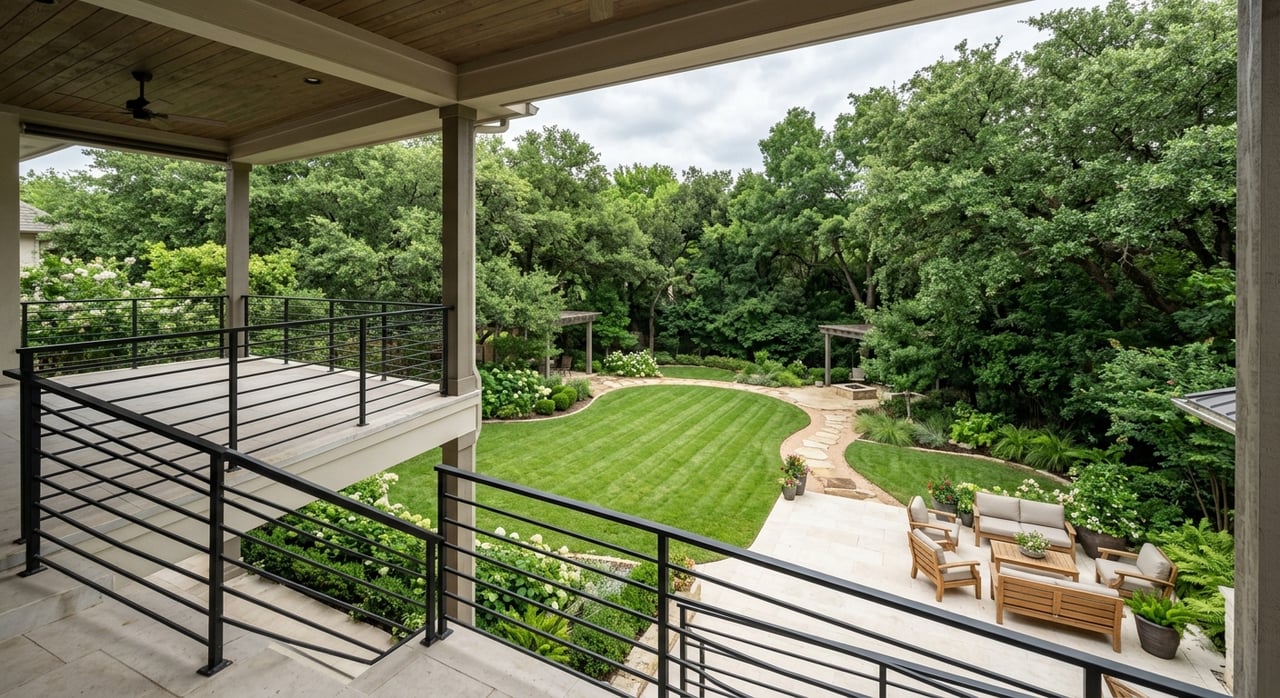
Wondering what golf course living in Trophy Club really feels like once you get past the pretty fairway views? If you are considering a move here, you are likely weighing lifestyle, home options, monthly costs, and how much structure comes with a country-club setting. This guide will help you understand how Trophy Club is built, what kinds of homes you can expect, and what to verify before you buy. Let’s dive in.
Why Trophy Club Stands Out
Trophy Club is a master-planned town along the SH 114 corridor near Southlake, Westlake, Roanoke, and the DFW and Alliance airport area. According to the town, it includes more than 1,000 acres of parks and 36 holes of golf woven through neighborhoods and wooded areas. That layout gives the community its signature look and feel.
For many buyers, that means golf is not just an amenity here. It is part of the streetscape, the views, and the rhythm of daily life. You may find homes that back to fairways, sit near cart paths, or connect easily to trails, parks, and other neighborhood features.
Golf Amenities Shape the Lifestyle
At the center of golf living in Trophy Club is Trophy Club Country Club. The club offers two private 18-hole championship courses: the Hogan Course, designed by Ben Hogan and Joe Lee, and the Whitworth Course, an Arthur Hills design honoring Kathy Whitworth. Both courses were built in 1975 and are par 72 layouts.
Beyond golf, the club also offers instruction, junior programs, club fitting, tournaments and outings, dining, fitness, racquet sports, pools, and social events. If you want a community where recreation and social activity are closely tied together, that is a major draw. It can create a more active, connected lifestyle than a typical suburban neighborhood.
It is also important to know that the club is private. The town notes that full membership privileges require membership and may include initiation fees, annual dues, and other costs. In other words, buying a home in Trophy Club does not automatically mean you have full club access, so you will want to confirm exactly what is included.
What Homes Look Like in Trophy Club
One of the biggest misconceptions about Trophy Club is that every home fits one narrow luxury profile. In reality, the housing stock spans several price points, lot sizes, and home styles. That variety gives buyers more options depending on how closely they want to align golf views, square footage, and budget.
A town HOA page describing one western section notes 339 homes built between 1998 and 2002 on lots typically ranging from about 0.15 to 0.35 acre. Builders in that section include Darling Homes, Drees Custom Homes, and Highland Homes. The same area highlights access to country club amenities, courts, youth fields, trails, greenbelt ponds, and a community pool, which captures the town’s suburban-country-club blend.
Townwide market data from March 2026 also show a broad range rather than a one-price-fits-all market. Trophy Club had a median listing price of $879,900, 63 homes for sale, a median 32 days on market, and homes closing at about 95% of asking price. Realtor.com described the market as balanced overall.
Higher-End Pockets to Know
If you are shopping at the upper end of the Trophy Club market, The Highlands at Trophy Club is an area to watch. March 2026 Realtor.com data put the neighborhood’s median listing price at $912,500 with a median 34 days on market. Redfin reported a March 2026 median sale price of $940,000.
Turnberry offers a helpful example of what larger golf-oriented homes can look like in this segment. Recent examples included homes around 5,000 square feet on roughly 0.24 to 0.30 acre lots, with pricing around $1.075 million to $1.14 million. A recent custom sale reached about $1.65 million for a 5,071-square-foot home.
These higher-end pockets tend to appeal to buyers who want generous square footage, stronger architectural presence, and a more executive-style feel. In many cases, the golf setting adds value, but buyers are still looking for function inside the home, not just a premium lot.
More Moderate Options Exist Too
Not every Trophy Club buyer is looking for the largest custom home. The Lakes of Trophy Club often serves as a useful comparison point for buyers who want the community’s amenities in a somewhat lower price tier. Redfin’s January 2026 data showed a median sale price of $600,000 and a median sale price per square foot of $196.
Recent sold homes there measured about 3,386 and 3,566 square feet, while current listings have ranged from roughly 1,943 to 3,062 square feet, with some larger nearby examples as well. That range can make The Lakes attractive if you want Trophy Club access and identity without stepping into the biggest executive-home segment.
HOA Rules Are Part of Daily Life
Golf course living in Trophy Club often comes with a stronger HOA presence than buyers may expect. That structure can support a polished look and consistent neighborhood feel, but it also affects what you can do with your property. You will want to review those rules carefully before you buy.
For example, Hogan’s Glen describes itself as an exclusive enclave in a gated section of Trophy Club. Its HOA requires an ACC request for any modification, change, repair, replacement, removal, or addition to a home’s exterior. The HOA also posts a 20 MPH speed limit and notes that walkers, joggers, pet walkers, and bicyclists share the roads.
The Lakes HOA is also active, with an annual membership meeting in October and quarterly open meetings. It also highlights neighborhood amenities such as country club access, trails, courts, a community pool, and nearby Freedom Dog Park access. That tells you HOA documents are not just paperwork. They shape how the neighborhood looks, operates, and feels day to day.
The Tradeoffs of Fairway Living
The appeal of golf course living is easy to understand. You may enjoy open views, established landscaping, a carefully maintained streetscape, and a strong neighborhood identity. In a place like Trophy Club, those features are part of what makes the setting feel elevated and established.
Still, every golf lot is a little different. A home near a tee box, green, or cart path may have a very different privacy and activity pattern than one tucked deeper into a neighborhood. Buyers should ask whether the lot faces a fairway, green, tee box, or cart path, and whether that location affects privacy, noise, or maintenance exposure.
That is why golf living here is often a balance between openness and oversight. You may gain a beautiful backdrop and a strong community framework, but you may give up some flexibility for exterior changes or a more private, low-activity setting.
Features Buyers Are Prioritizing Now
Current Trophy Club listings point to a clear pattern in what buyers value. Listing descriptions repeatedly mention private offices, main-level suites, game rooms, media rooms, updated kitchens, and outdoor entertaining areas with pools, pergolas, and grills. That suggests today’s buyers want homes that work well for everyday living in addition to offering a strong setting.
In other words, the golf view alone is usually not enough. The most compelling homes tend to pair location with flexible floor plans, updated finishes, and outdoor spaces that support entertaining or relaxing at home. If you are comparing properties, it helps to look at the total package rather than the lot alone.
What to Verify Before You Buy
Before making an offer on a golf-oriented home in Trophy Club, it helps to work through a practical checklist. These details can affect both your budget and your long-term enjoyment of the property.
- Verify which HOA governs the specific address
- Confirm whether country club membership is required or optional
- Review any ACC or exterior modification rules before planning changes
- Check the lot’s orientation to fairways, greens, tee boxes, and cart paths
- Compare the home with recent neighborhood comps, not just the townwide median
- Factor in the full carrying cost, including potential membership expenses and HOA obligations
These steps matter because Trophy Club includes a wide mix of housing types and neighborhood settings. A home in The Lakes may live very differently from one in The Highlands, Turnberry, or a gated golf enclave, even though all fall under the same town identity.
Is Trophy Club the Right Fit for You?
Trophy Club is best understood as a country-club suburb with established landscaping, a strong HOA framework, and a meaningful range of home sizes and price points. If you want master-planned golf living with suburban convenience, it offers a distinctive option in the DFW area. If you prefer minimal restrictions or larger private acreage, the tradeoffs may feel less appealing.
The key is to match the home, lot, and neighborhood to the lifestyle you actually want. When you take time to verify club access, HOA rules, lot orientation, and neighborhood-specific pricing, you can make a more confident decision and avoid surprises later.
If you are exploring Trophy Club or comparing it with other luxury suburbs nearby, Selling Southlake can help you evaluate the lifestyle, the numbers, and the neighborhood details with a concierge approach.
FAQs
What is golf course living like in Trophy Club, Texas?
- Golf course living in Trophy Club typically means living in a master-planned town where fairways, parks, trails, and neighborhood amenities are closely integrated, with private club access available through membership.
Does buying a home in Trophy Club include country club membership?
- No. Trophy Club Country Club is private, and full membership privileges require membership that may include initiation fees, annual dues, and other costs.
What types of homes are available in Trophy Club?
- Trophy Club offers a range of homes, from more moderate-size options in areas like The Lakes to larger executive and custom homes in neighborhoods such as The Highlands and Turnberry.
Are HOAs common in Trophy Club neighborhoods?
- Yes. HOA oversight is a meaningful part of many Trophy Club neighborhoods, and rules may affect exterior changes, community operations, and neighborhood appearance.
What should buyers check before purchasing a golf course home in Trophy Club?
- Buyers should verify the HOA, confirm whether club membership is required or optional, review exterior modification rules, assess lot orientation and cart-path proximity, and compare the property against recent neighborhood sales.
Is Trophy Club a balanced real estate market?
- As of March 2026, Realtor.com described Trophy Club as a balanced market overall, with a median listing price of $879,900, 63 homes for sale, and a median 32 days on market.